
South Park 角色:撰寫清晰的旁白視覺指南
規劃一份清晰的旁白角色指南,包含 12 個 South Park 角色簡介、具體的視覺描述、比較式轉場,以及實用的圖像與旁白撰寫建議。
本頁更新動態
- — 文章首次發布。

A narrated character guide should tell viewers what to look at while the relevant image is on screen. South Park characters suit this approach because a small number of visible features explain their identities: Stan's cap, Kyle's earflaps, Kenny's hood, and Cartman's wider silhouette. The narration can direct attention to those features without reciting an entire biography. For a character to introduce in your own visual guide, try South Park Character Creator.
This article uses artwork from the South Park Public Library to outline a readable image-and-voice structure. It is an illustrated fan reference, with proposed narration notes.
Give the voice and picture different jobs
The picture shows the figure; the voice names the person and explains one useful observation. Avoid describing every visible detail at once. A viewer should have time to find the feature you mention before the next image arrives. If the narration needs a fact that the image cannot show, make that change of subject explicit.
Eric Cartman
Cartman's red coat forms a broad shape beneath a turquoise-and-yellow cap. A short narration can direct viewers to the body width first, then the hat. That order explains what distinguishes the full portrait, rather than leaving the audience to interpret a disconnected list of colors while looking at the figure.
Stan Marsh

Stan's blue cap carries a red band and pom-pom, echoed by red gloves. His brown jacket provides a quieter area below the face. A voice note can explain the repeated red accent while the image stays still, giving viewers a concrete relationship to notice before moving on.
Kyle Broflovski

Kyle's green earflap hat widens the head outline above an orange coat. Narration should name the earflaps rather than say only “green hat.” The more specific wording helps a listener follow the picture and prepares a useful comparison with Craig, whose headwear has a similar general type but different colors.
Kenny McCormick
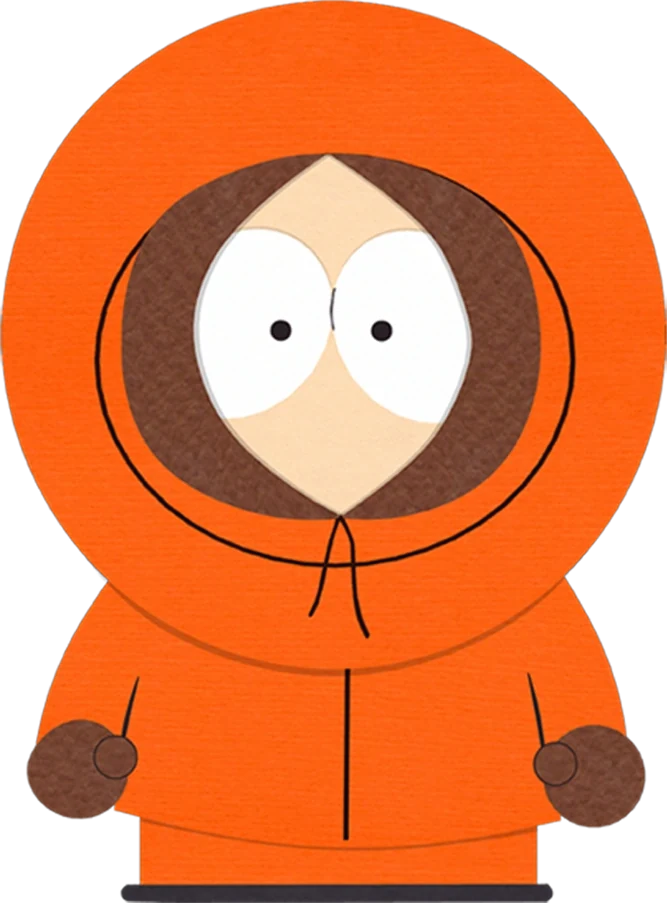
Kenny's orange hood encloses most of his face, with the eyes inside a dark opening. Let the image show the enclosure as the narration explains it. A close-up of only the eyes would remove much of the information the voice is discussing, so the frame and description should agree.
Use comparisons to keep the explanation moving
Butters Stotch
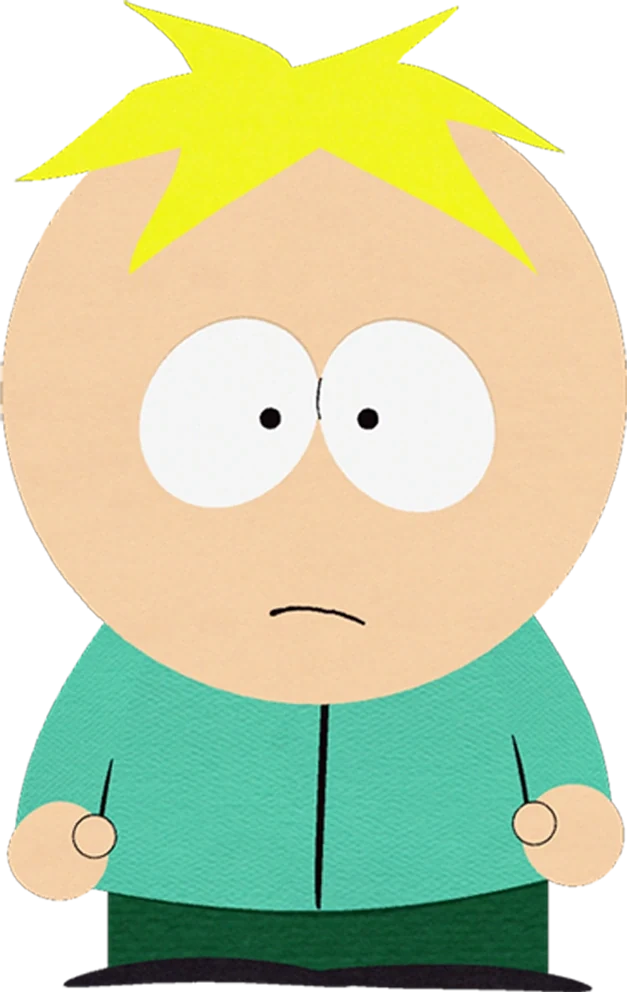
Butters' small blond tuft and turquoise shirt make a relatively open outline. He offers a natural comparison with the hats above. The narration can point out that the hairstyle now provides the upper recognition cue, without adding an unrelated story summary that the portrait cannot illustrate.
Tweek Tweak
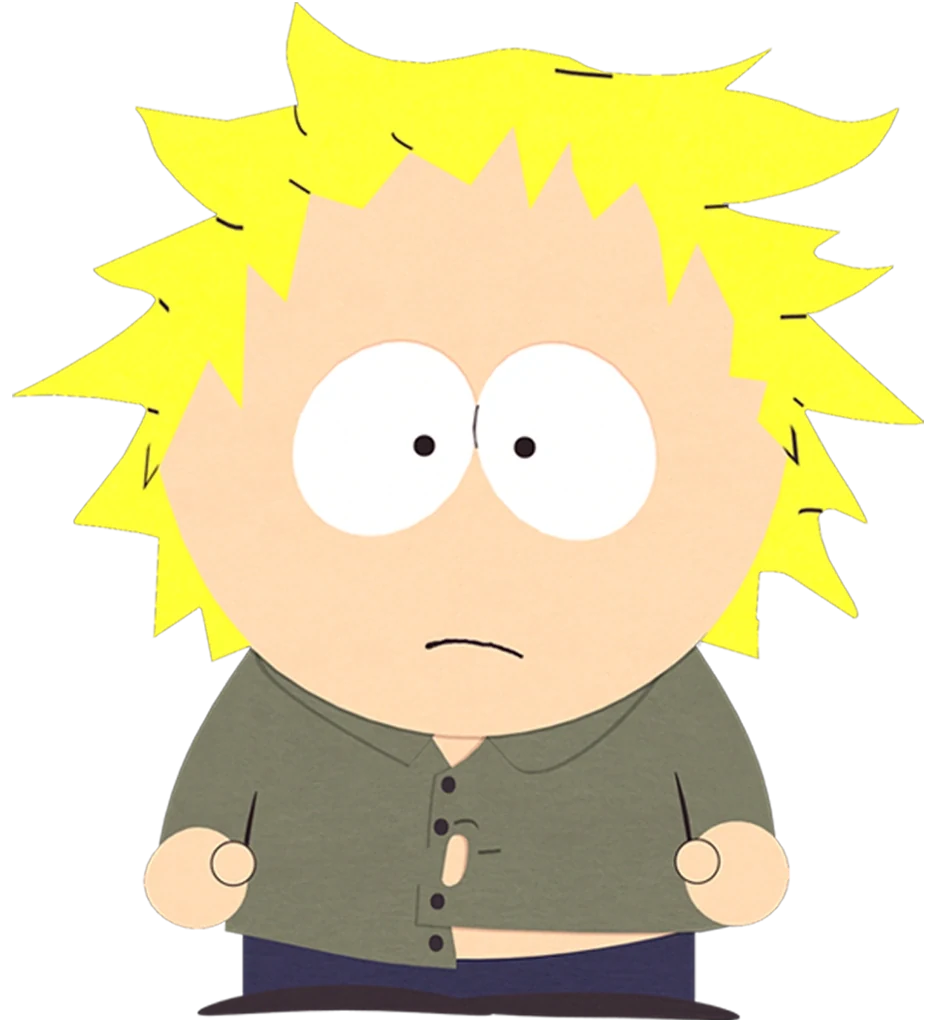
Tweek's blond hair spreads outward in several directions, above an olive shirt with an uneven closure. Compare the hair shape with Butters' compact tuft. The shared color makes the difference easy to explain, while the still image gives the viewer time to inspect its contour.
Wendy Testaburger
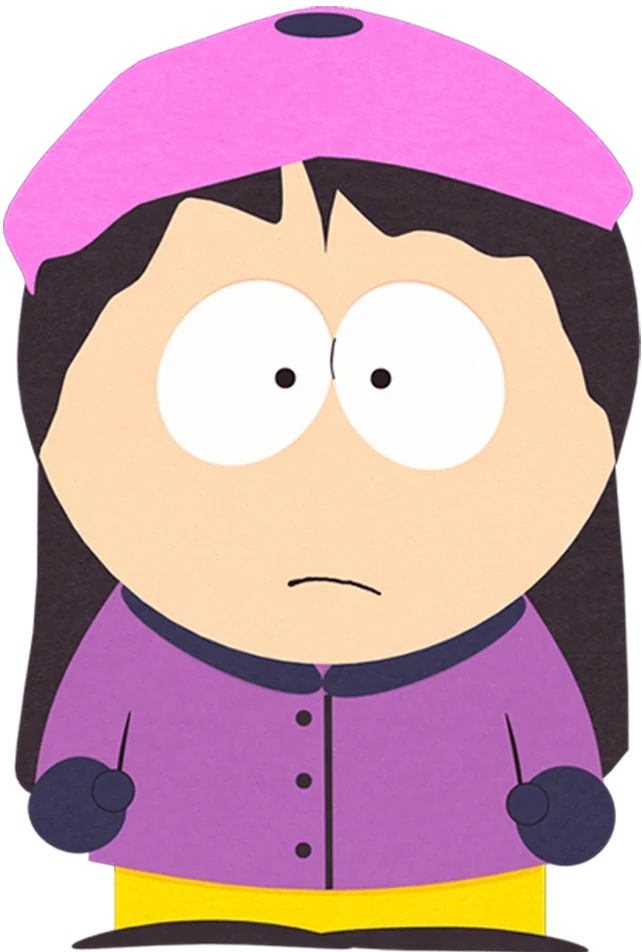
Wendy's pink beret, long dark hair, and purple jacket form distinct areas. A narration note can begin with the beret and then move down to the hair length. Keep the full upper figure visible so listeners can follow that path through the image rather than imagine details outside the crop.
Bebe Stevens
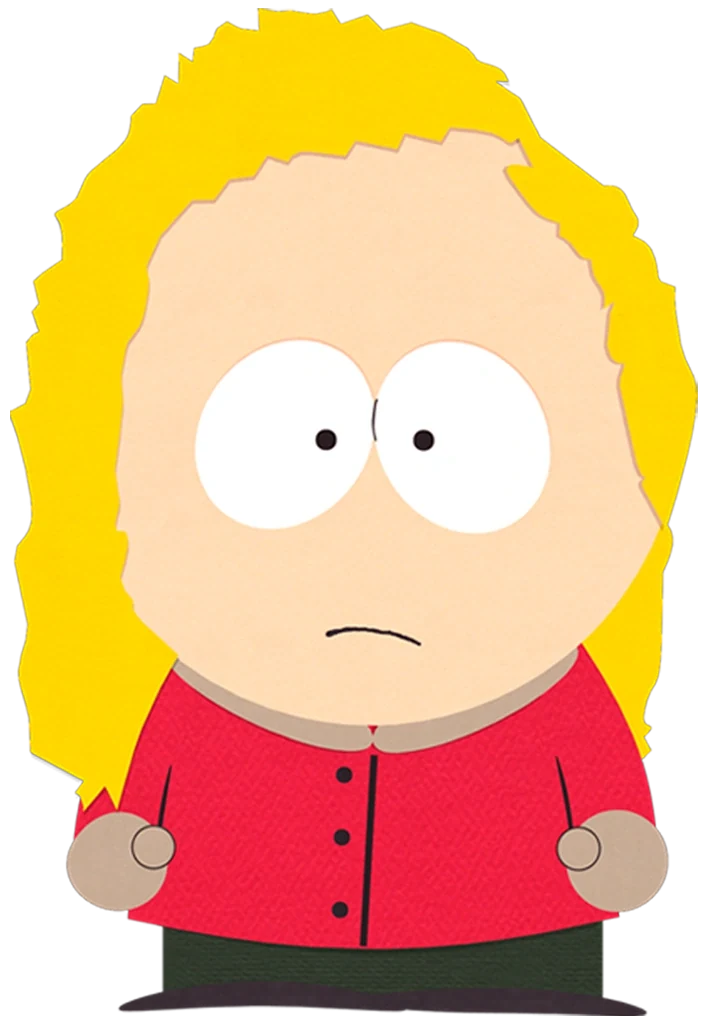
Bebe's blond hair creates a fuller border around the head and shoulders, with a red top below. Placing her after Wendy makes the change in framing easy to hear and see. Explain the contrast in hair volume, leaving viewers to observe the simple face style both portraits share.
Include the wider cast with respectful, precise descriptions
Tolkien Black
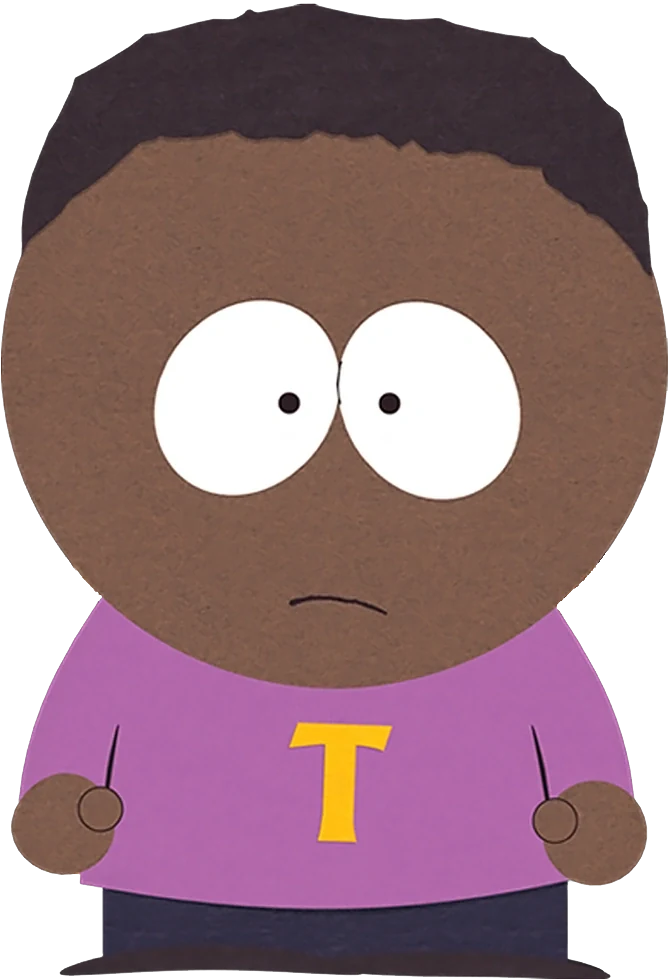
Tolkien's purple shirt carries a yellow T beneath his dark hair. Say his full name clearly, then point to the shirt detail if the image is large enough. A narration guide should use the character's current identification rather than repeat an older spelling found in an asset filename.
Jimmy Valmer

Jimmy wears a yellow top, with crutches visible beside his full-body pose. Introduce him by name and describe the complete image naturally. The supports affect the outline, so retain room on either side rather than showing a narrow crop while the voice refers to details the viewer cannot see.
Timmy Burch
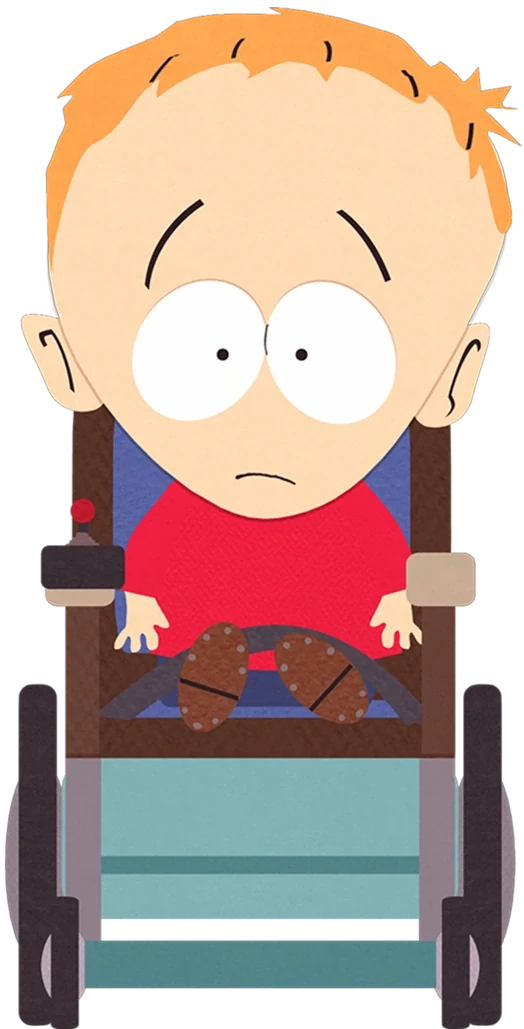
Timmy's red shirt sits above the lower section of his wheelchair, with orange hair framing the face. A useful narration identifies him and explains the seated arrangement. Avoid making the description entirely about one physical feature; the image presents a person, clothing, posture, and surrounding structure together.
Randy Marsh

Randy appears here in a farmer outfit, including a brimmed hat and plaid shirt. The narration should name that variation immediately. Otherwise, viewers may treat the image as a generic costume reference, missing the distinction between a character's identity and a specific outfit shown in the library.
Draft the narration before deciding its duration
For a short illustrated guide, start with one idea per image. Read the sentences aloud and remove clauses that force the listener to remember a detail from a previous card. If two comparisons are needed, keep the relevant portraits together. The timing should follow the explanation and image complexity, rather than an arbitrary target length.
For an original cartoon character, a proposed introduction might be: “This is our neighborhood courier. The green helmet and tan coat make the silhouette easy to recognize. The blue bag explains the delivery role.” It gives the voice three concrete observations with a matching picture in mind.
If a South Park character creator or South Park character maker is part of your planning, save the still reference separately from the script. The narration should describe the result that actually exists, not promise details that a future image may fail to include. Review actual audio for name pronunciation and actual imagery for the features the voice mentions.
Develop a visual story idea from the homepage, or read other illustrated topics in the blog. Available audio and video options depend on the actual model and settings; this guide concerns communication rather than a guaranteed production workflow. Choose the visible details your narration will help a viewer notice when you try South Park Character Creator.
Write transitions that orient the listener
A transition should explain why the next picture appears. After Butters, a line such as “Tweek also has blond hair, but his outline is much more scattered” gives viewers a comparison to follow. After the children, “This Randy image shows a specific farmer outfit” announces a change from character identification to costume context. Both transitions prepare the audience for a visible difference.
Keep sentences short enough to say comfortably, and place unfamiliar names where they can be heard clearly. A label on screen can reinforce the spoken name without competing with a long paragraph. If a comparison needs two images, display both while explaining it rather than expecting the listener to remember the previous portrait. Read the script aloud against the planned image order. Any sentence that refers to a hidden detail, an absent image, or a context you have not introduced is a useful place to revise before producing the presentation.
Introduce the Warcraft context as a new topic
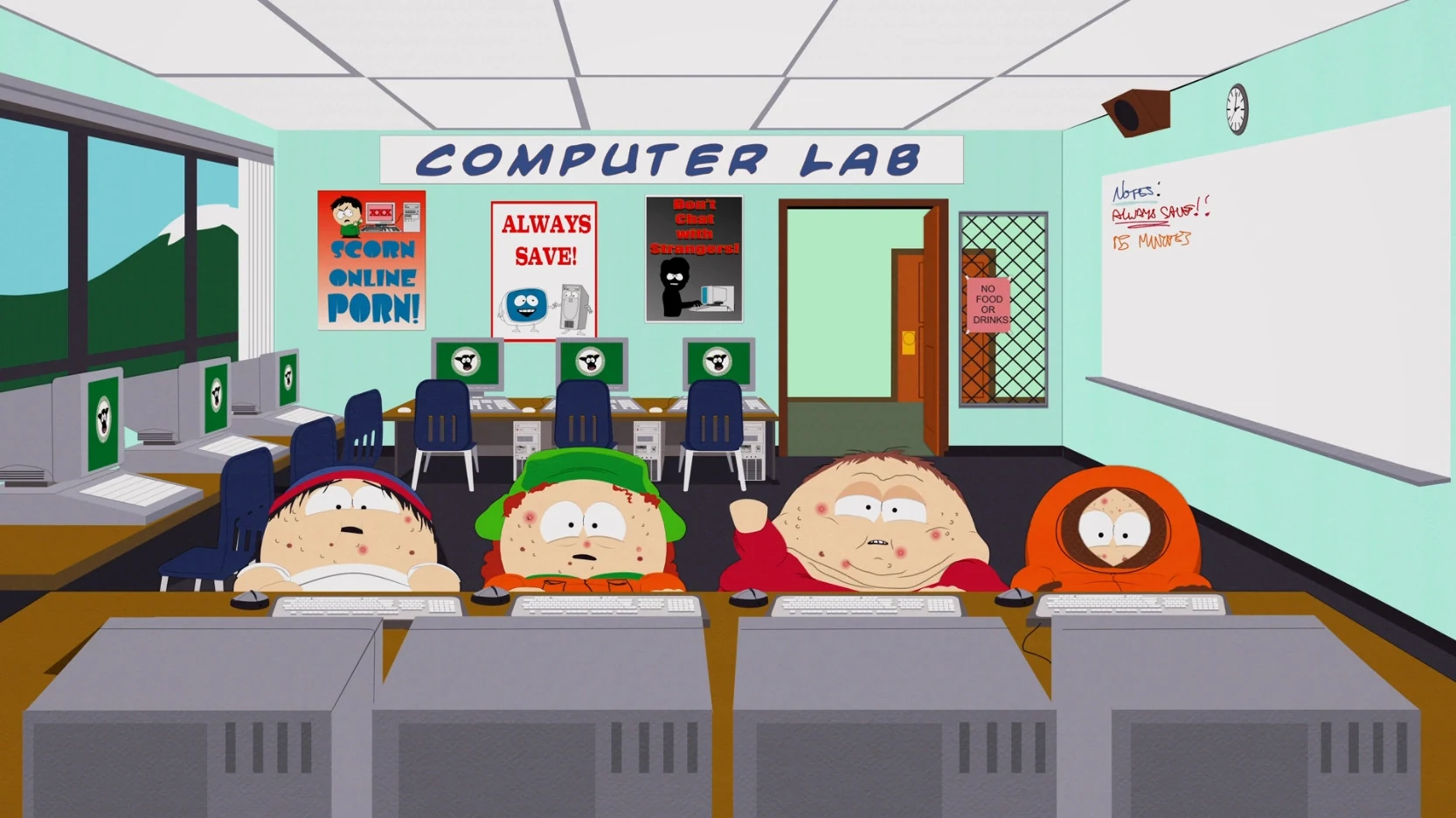
Make Love, Not Warcraft is the episode behind the South Park World of Warcraft topic. The boys' game characters are repeatedly killed by a powerful player, and Cartman leads a plan to strengthen the group and defeat him. Introduce that story context before displaying an episode frame.
The computer-lab image shows changed appearances with familiar clothing. Kyle keeps the green hat, Kenny the orange hood, and Stan the blue-and-red cap. Cartman is in red without his usual hat. Narration can explain those surviving identity cues while the viewer sees the group and its setting.
為南公園製作器簡報時,請以口頭標明從肖像轉向集數情境的變化。標準的 Cartman 南公園圖片辨識單一角色;這張畫面則說明共同情境。讓口述描述與這項變化相符,能讓聽眾保持方向感,而不需要冗長的劇情摘要。若想開發角色並在你的視覺指南中介紹,請試用南公園角色建立器。